

Getting an IRS audit notice is one of the most stressful pieces of mail a taxpayer can receive. Understanding IRS audit representation, what it actually involves and what happens at each stage, can turn that anxiety into a clear, manageable process.
This guide walks through what to expect if you’re audited, what a tax professional actually does on your behalf, and how to prepare so the process goes as smoothly as possible.
What Is IRS Audit Representation?
IRS audit representation means a qualified tax professional, a CPA, Enrolled Agent, or attorney, communicates and negotiates with the IRS on your behalf during an audit. Instead of responding to IRS questions and requests yourself, your representative:
- Reviews the audit notice and identifies exactly what’s being questioned
- Gathers and organizes the documentation the IRS is requesting
- Communicates directly with the IRS agent assigned to your case
- Negotiates on your behalf if adjustments, penalties, or payment plans come up
Not every tax preparer can do this. Only professionals with “unlimited representation rights”, CPAs, Enrolled Agents, and attorneys, are authorized to represent you before the IRS on any tax matter.
The Three Main Types of IRS Audits
Correspondence Audit
The most common and generally least severe type. The IRS requests specific documentation or clarification by mail, often about a single item on your return.
Office Audit
You’re asked to bring specific records to a local IRS office for an in-person review, typically covering a handful of items rather than your entire return.
Field Audit
The most comprehensive type. An IRS agent visits your home or business to conduct a broader review, and the scope can expand if the agent identifies additional concerns during the visit.
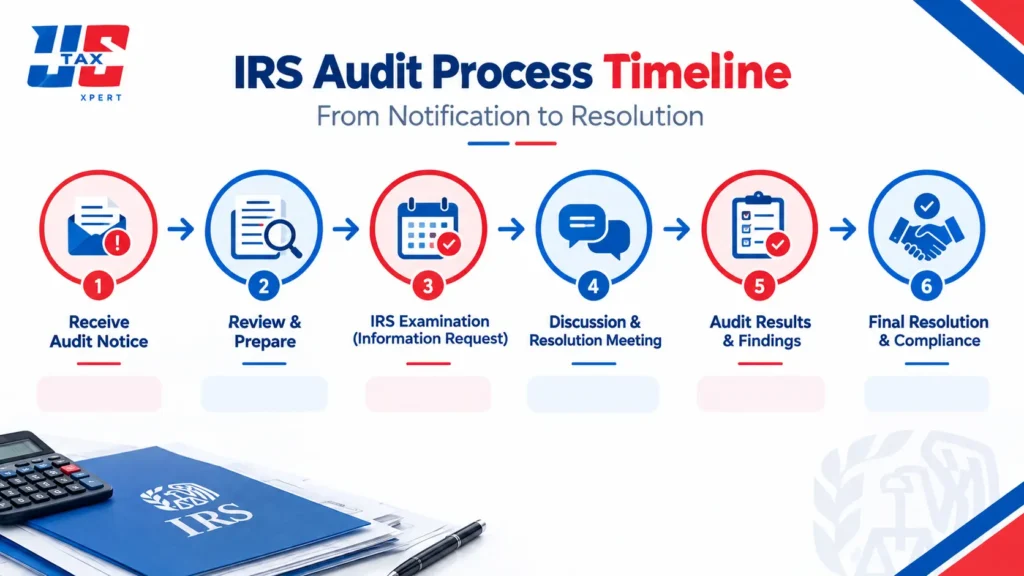
What to Expect: The IRS Audit Process, Step by Step
| Stage | What Happens |
|---|---|
| 1. Notification | You receive an official letter identifying what’s being audited and what documentation is needed |
| 2. Initial Assessment | Your representative reviews the notice, evaluates your risk exposure, and outlines a response strategy |
| 3. Documentation Gathering | Receipts, bank statements, and other records are organized to substantiate your return |
| 4. IRS Communication | Your representative handles all direct communication so you’re not answering agent questions unprepared |
| 5. Resolution | The audit concludes with a “no change” result, an agreed adjustment, or a negotiated settlement |
What Happens If You Ignore an Audit Notice?
Ignoring an audit notice is one of the worst possible responses. If you don’t respond, the IRS will typically proceed based only on the information it already has, which is rarely in your favor. This can result in:
- An automatically assessed additional tax balance
- Penalties and accumulating interest
- Loss of the opportunity to dispute the IRS’s initial findings
Responding promptly, even just to acknowledge the notice and request more time if needed, is always better than silence.
How to Prepare Before Your Audit Begins
Gather all documentation related to the specific items the IRS flagged, don’t wait to be asked twice
Avoid volunteering information beyond what’s specifically requested
Have your representative review your position before any communication with the IRS begins
Keep a clear paper trail of every communication and document submitted
Can IRS Audit Representation Reduce What You Owe?
Representation doesn’t guarantee a smaller final balance, but it meaningfully improves your odds of a favorable outcome. A qualified representative can:
Ensure documentation is presented clearly and in the format the IRS expects
Identify legitimate deductions or positions that support your original return
Negotiate penalty abatement where applicable
Prevent the audit’s scope from expanding unnecessarily due to unprepared responses
Will an Audit Automatically Mean You Owe More?
Not necessarily. Audits can conclude in one of three ways:
- No change, the IRS accepts your return exactly as filed
- Agreed adjustment, you and the IRS agree on a revised amount owed (or in some cases, owed to you)
- Disputed adjustment, you disagree with the IRS’s findings and pursue an appeal
A well-documented, well-represented audit response improves your chances of a “no change” or favorable outcome.
Why Enrolled Agent or CPA Representation Matters
Enrolled Agents are licensed directly by the IRS and hold unlimited rights to represent taxpayers on any tax matter, including audits, collections, and appeals. This is a meaningfully different credential from a general tax preparer, who may not be authorized to represent you at all once an audit begins, even if they prepared your original return.
If you’re facing an audit and want direct, authorized representation, our IRS audit representation services connect you with professionals who can speak to the IRS on your behalf from day one.
Frequently Asked Questions
How long does an IRS audit typically take?
It varies by audit type. A correspondence audit might resolve in a few weeks once the right documentation is submitted, while a field audit can take several months, especially if the scope expands.
Do I have to meet with the IRS in person?
Not for a correspondence audit. For office or field audits, your representative can often attend on your behalf or alongside you, reducing what you personally need to handle.
What documents does the IRS usually request?
This depends on what’s being audited, but commonly includes receipts, bank and credit card statements, mileage logs, and documentation supporting specific deductions or income sources.
Can I represent myself during an IRS audit?
Yes, but it’s generally not recommended for anything beyond a simple correspondence audit. Without professional guidance, it’s easy to unintentionally expand the scope of the audit or provide more information than necessary.
What’s the difference between an audit and a collections notice?
An audit examines whether your return was filed correctly. A collections notice deals with unpaid tax already assessed. Representation can help with both, but the strategy differs.
Does hiring representation increase my chances of a larger audit?
No. Hiring qualified representation is a normal, expected step and does not signal wrongdoing to the IRS, it simply ensures your case is handled correctly and professionally.
Facing an IRS Audit? Don’t Navigate It Alone
The earlier you bring in representation, the more options you typically have. Schedule a consultation with our team to discuss your specific situation.